Last updated 2026-08-18
TL;DR
Alaska issues no yellow grease collection license. You renew one thing: your $50 Alaska business license, done online in about five minutes. No DEC transport permit if the oil goes to a recycler. Prices tracked the national USDA average of roughly $0.34 per pound in 2024, and Alaska collectors net less after freight south. This guide covers the real paperwork, theft-proofing, and local permits in Anchorage, Fairbanks, and the boroughs.
Do you need a license for yellow grease collection in Alaska?
No. Alaska does not make you get a special yellow grease hauling license from the Department of Environmental Conservation. State solid waste rules (18 AAC 60) exempt materials hauled for recycling from the transporter permit requirement [1]. Oil collected for biodiesel or animal feed lands squarely inside that exemption.
So you're not a "licensed hauler" in the waste sense. That holds only if every drop you pick up ends up at a real renderer or biodiesel plant. Dump it, and you've broken the exemption. Then the solid waste rules land back on you.
What you do need is a state business license from the Division of Corporations, Business and Professional Licensing (CBPL). It costs $50 a year and covers commercial activity of any kind [2]. That single credential is the whole state-level story. A handful of municipalities want a local license or a background check. More on that below.
How do you renew your Alaska business license?
Renewal is quick. Log into the CBPL portal through MyAlaska, pay the $50 fee, and the license renews on the spot. The Division emails a renewal notice about 60 days before your expiration date [3].
Miss the window and you can still renew up to 90 days late with no penalty, beyond a possible reinstatement fee if you let it lapse past a year. Corporations and LLCs run on a two-year cycle. Sole proprietors and general partnerships renew every year. Most grease collectors set up as sole props or single-member LLCs, so annual renewal is what you'll live with.
Keep a digital copy of the renewed license. Some rendering plants want to see it before they'll take a batch or cut you a check.
What is the national yellow grease price trend since 2020?
Yellow grease has swung hard. The USDA Economic Research Service reports U.S. average prices of $0.18 per pound in 2020, $0.28 in 2021, $0.50 in 2022, $0.45 in 2023, and about $0.34 in 2024 [4]. Those are FOB plant numbers. Alaska collectors see less in hand after freight south.
What local permits do you need in Alaska?
Anchorage and Fairbanks both want a municipal business license if you pick up oil inside city limits. Anchorage charges $100 a year for a general business license and may ask for a basic police background check [5]. Fairbanks issues a city business license for $50 a year, due for renewal by January 1 [6]. Smaller boroughs like Matanuska-Susitna often skip the requirement, but call the borough clerk before you assume.
No municipality runs a separate "yellow grease" registration. They see you as plain commercial activity.
Collecting from restaurants inside a city with a health department? You don't carry a health permit yourself. The restaurant's permit covers waste oil stored on its own site. Your job is to keep bins and pickups from creating a nuisance. A leaking bin or a foul smell is what pulls a code enforcement officer to the door.
What are the vehicle and bin rules for hauling grease?
No state rule sets tank or bin standards for yellow grease beyond general safety. A few common-sense items keep you legal:
- For vehicles rated over 10,000 pounds GVWR, Alaska DMV requires commercial plates, plus a USDOT number if you weigh 10,001 pounds or more in interstate commerce. Most short-haul collector trucks stay under 10k and dodge that [7].
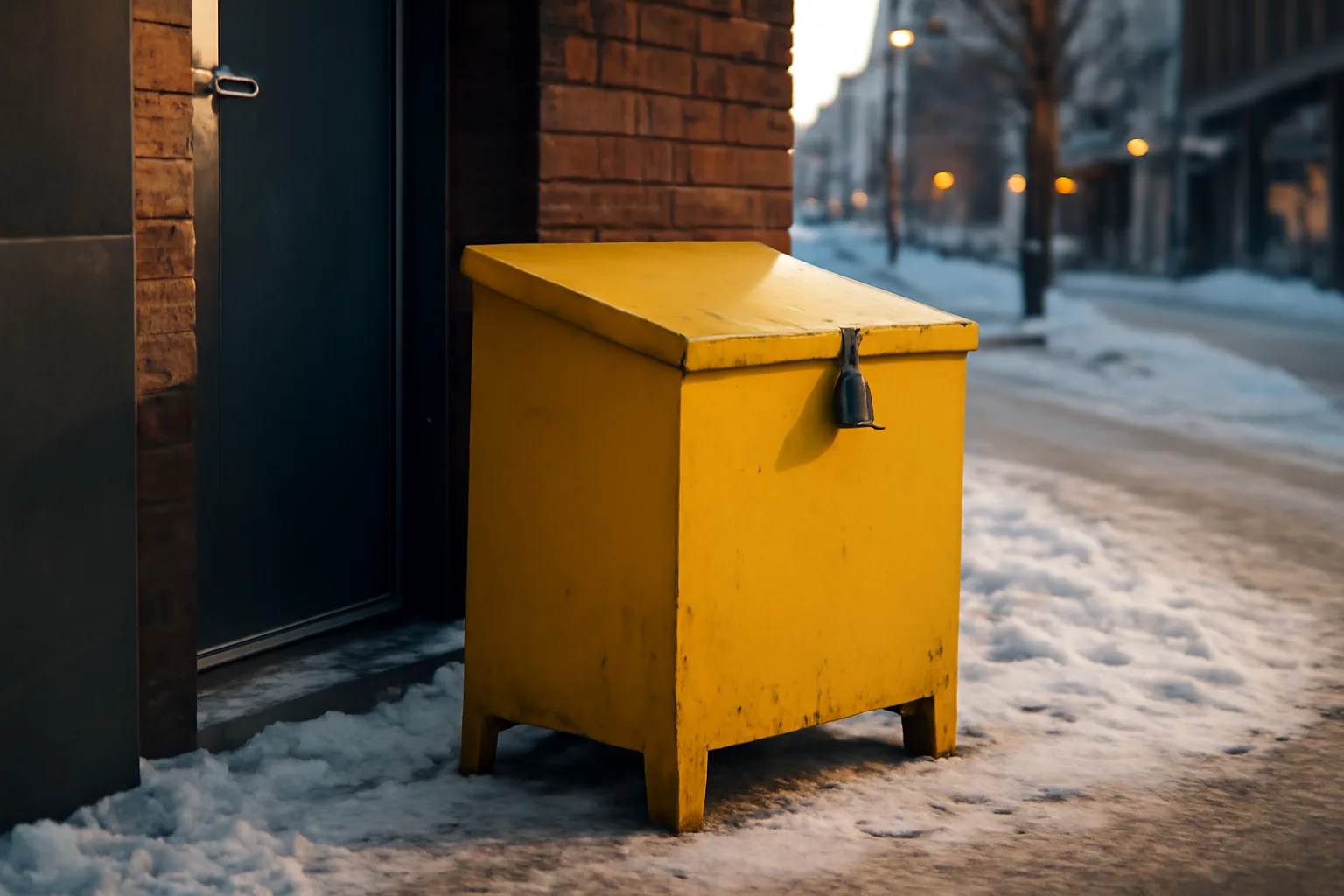
- Bins should be leak-proof, labeled, and locked. Restaurants want the locks. Locks cut theft. A padlock through a steel lid latch does the job.
- Haul more than 119 gallons of vegetable oil at once and the EPA Spill Prevention, Control, and Countermeasure (SPCC) rule can apply. That's rare for a small collector, but check it if you run a large tanker [8].
For the lockable setup, the YellowGreasePath Kit ($149 one-time) includes a 55-gallon steel bin with a hasp, a heavy padlock, and a renderer contract template. That's the one purchase that handles the hardware side of compliance and theft for a startup collector.
How do you prevent grease theft and structure renderer agreements?
Theft is the biggest headache in this business. Locked bins stop the casual thief. A signed agreement with each restaurant, saying they can't sell the oil to another collector, gives you a legal footing. That's not a state form. It's a private contract, and it's yours to write.
The renderer contract template inside the YellowGreasePath Kit sets payment terms, pickup schedule, and theft recourse. Pair it with a schedule you actually keep and the restaurant stops shopping around. Most theft happens when someone offers a penny more per gallon. Reliable service plus a locked bin, and they don't switch.
Write down your lock serial numbers. If a bin gets broken into, file a police report. In Anchorage, police can treat grease theft as theft of services or property, often a misdemeanor [9].
How much does yellow grease cost in Alaska?
Two numbers matter: what you pay the restaurant and what the renderer pays you. In Alaska, collectors rarely pay restaurants a dime. Owners just want the oil gone. Some take a token $0.10 to $0.20 per gallon, but most are happy with free scheduled pickup.
On the sale side, you're selling to a rendering plant, almost always in the Lower 48. The national average for yellow grease in 2024 ran about $0.34 per pound [4]. Alaska collectors usually land $0.05 to $0.10 less per pound after freight to a Seattle or Portland renderer. That nets roughly $0.24 to $0.29 per pound in hand.
Prices move weekly. The USDA AMS Ag Energy Roundup publishes a weekly FOB Midwest plant price [10]. Track it, then subtract a rough $0.08 per pound for barge or container freight out of Alaska. Call renderers directly. Darling Ingredients, Baker Commodities, and several smaller plants buy Alaska oil, but they set minimum loads, often around 40,000 pounds. Many Alaska collectors solve that by consolidating with a local aggregator who ships a container south.
For a closer look at pricing models, see our guides on yellow grease cost in Tennessee and Texas, where the pickup economics run different.
How long does yellow grease licensing take in Alaska?
The state business license takes about five minutes online. A renewal posts immediately. A brand-new application processes electronically within one business day [2].
Local permits in Anchorage or Fairbanks can run two to four weeks if a background check or zoning review is in play. A new Anchorage municipal business license can take up to 30 days [5]. Fairbanks tends to move faster, about 10 business days [6].
There's no state yellow grease credential adding to the wait. Once your business license is current, you can start collecting that day.
How do you stay compliant year after year?
Renewal is annual or every two years, depending on your entity type. Set a calendar reminder 90 days out. The MyAlaska portal shows your status in seconds.
Three things keep you out of trouble:
1. Keep spill records. A spill over 55 gallons has to be reported to the Alaska Department of Environmental Conservation within 24 hours [11]. 2. Keep invoices and renderer receipts. They prove your oil went to recycling, not a landfill. 3. Renew your municipal license if you need one. A lapsed Anchorage license can trigger a fine.
No inspections. No sampling fees. No state-mandated bond. Alaska runs light on grease. Keep your insurance current (commercial auto, general liability), because the renderer will ask for a certificate before they pay you.
How does Alaska compare to other states for grease licensing?
Alaska is easy next to states like California, which charges per-gallon fees, or Florida, which wants a used oil transporter number. In Alaska, you skip the specialized license outright. For a small operator, that's real money and time saved.
Read our Georgia renewal guide if you're expanding south. For a pricing angle, see how Arizona collectors work a desert market.
Frequently asked questions
Do I need a license for yellow grease in Alaska?
No specialized state license is required. You need a general Alaska business license ($50 per year) from the Division of Corporations, Business and Professional Licensing. No DEC transporter permit is needed if the oil goes to a renderer or biodiesel plant.
How much does yellow grease cost in Alaska?
The national average price in 2024 was about $0.34 per pound (USDA ERS). Alaska collectors typically receive $0.05 to $0.10 less per pound after freight to Lower 48 renderers, netting roughly $0.24 to $0.29 per pound. Prices fluctuate weekly; check USDA AMS reports.
How long does yellow grease licensing take in Alaska?
State business license renewal is immediate online. New applications are approved within one business day. Anchorage municipal licenses can take up to 30 days for initial processing; Fairbanks typically 10 business days. No other permits add waiting time.
Does Alaska require a used cooking oil transporter permit?
No. Under 18 AAC 60, materials hauled for recycling are exempt from solid waste transporter licensing. As long as you deliver to a legitimate recycler, you don't need a DEC hauling permit for used cooking oil.
Can I collect yellow grease in Fairbanks without a city license?
You need a Fairbanks City business license if you pick up oil from any restaurant within city limits. The annual fee is $50, and it must be renewed by January 1 each year. Check with the Fairbanks Clerk's office for current forms.
What happens if I collect grease without any license in Alaska?
Operating without a state business license can result in a civil fine. The Division of Corporations may issue a cease and desist order. Municipalities can fine you for missing a local license, and Anchorage penalties add up fast. Theft of oil without a contract is a separate criminal matter.
Do I need commercial vehicle plates for a grease truck?
Alaska requires commercial plates if your truck's gross vehicle weight rating exceeds 10,000 pounds. Many small collectors use a pickup with a tank in the bed under that threshold. Over 10k, you'll also need a US DOT number if engaged in interstate commerce.
Is yellow grease considered hazardous waste in Alaska?
No. Vegetable-based cooking oil is not hazardous waste. It's regulated as solid waste only if disposed of. When collected for recycling, it's exempt from solid waste handling rules.
Do I need a spill prevention plan for yellow grease?
EPA's SPCC rule applies only if you store more than 1,320 gallons of oil above ground. That's rare for a collector. If you transport more than 119 gallons at a time, the EPA treats you as a transport-related facility; check 40 CFR 112. Small operators typically fall below all thresholds.
How can I stop restaurant oil theft?
Locked bins and signed collection agreements. A consistent schedule and a no-cost pickup for the restaurant remove incentives for them to sell to someone else. Serial-numbered padlocks and a police report if a lock is broken also help.
Does Alaska require a renderer contract?
Not by law. But a written contract with a licensed renderer is standard practice. It sets payment terms, pickup frequency, and quality specs. Few renderers will buy oil from a collector without one.
Sources
- Alaska Division of Corporations, Business and Professional Licensing, Business Licensing: Business license requirement, $50 fee, online renewal, 1-day processing for new applications.
- Alaska CBPL, Renew Your Business License: Renewal notice sent 60 days before expiration; online renewal through MyAlaska.
- USDA Economic Research Service, Oil Crops Yearbook, Table 34: Annual average yellow grease price, U.S., 2020-2024 (2020: $0.18/lb, 2021: $0.28/lb, 2022: $0.50/lb, 2023: $0.45/lb, 2024: $0.34/lb).
- Alaska DMV, Commercial Motor Vehicles: Commercial vehicle registration thresholds and USDOT number requirements.
- EPA, Spill Prevention, Control, and Countermeasure (SPCC) Rule, 40 CFR 112: Applicability thresholds for oil storage and transportation.
- Anchorage Municipal Code, Title 8, Theft of Services: Theft of services includes misappropriation of grease as property; misdemeanor penalties.
- USDA AMS, National Weekly Ag Energy Roundup: Weekly yellow grease FOB Midwest plant price used for market tracking.
- Alaska DEC, Spill Response, Reporting Requirements: Spills exceeding 55 gallons must be reported within 24 hours.