Last updated 2026-08-18
TL;DR
In Tennessee, yellow grease collectors usually pay restaurants nothing for small accounts and can offer a $0.10, $0.35 per pound rebate once volumes climb. The state requires registration with the Tennessee Department of Agriculture as a used cooking oil transporter. Setup runs $200, $600 before equipment. Confirm current fees and processing times with the TDA.
What does yellow grease actually cost in Tennessee?
The price of yellow grease in Tennessee depends on which side of the deal you're on. If you're a collector picking up used cooking oil from restaurants, you may pay the restaurant nothing, or you may pay them a small rebate per pound once your volumes get large enough to compete for the account. Run one or two restaurant stops a week and you'll more likely pay nothing, hauling the oil away as the service itself.
On the open commodity market, yellow grease (used cooking oil, UCO) trades in the range of roughly $0.30, $0.55 per pound at the processor or renderer level, though that number moves with energy markets and biodiesel feedstock demand [1]. What a collector nets after hauling costs, bin maintenance, and the renderer split is usually well below that ceiling. Tennessee collectors report taking home somewhere in the $0.10, $0.35 per pound range after costs. Nobody publishes audited figures on small-operator margins, and the spread is genuinely wide.
For restaurants on the receiving end, the cost is typically zero or better. A high-volume account generating 500+ pounds a week might negotiate a rebate from their collector. Smaller accounts, say a diner doing 50 pounds a week, get free removal and that's the deal.
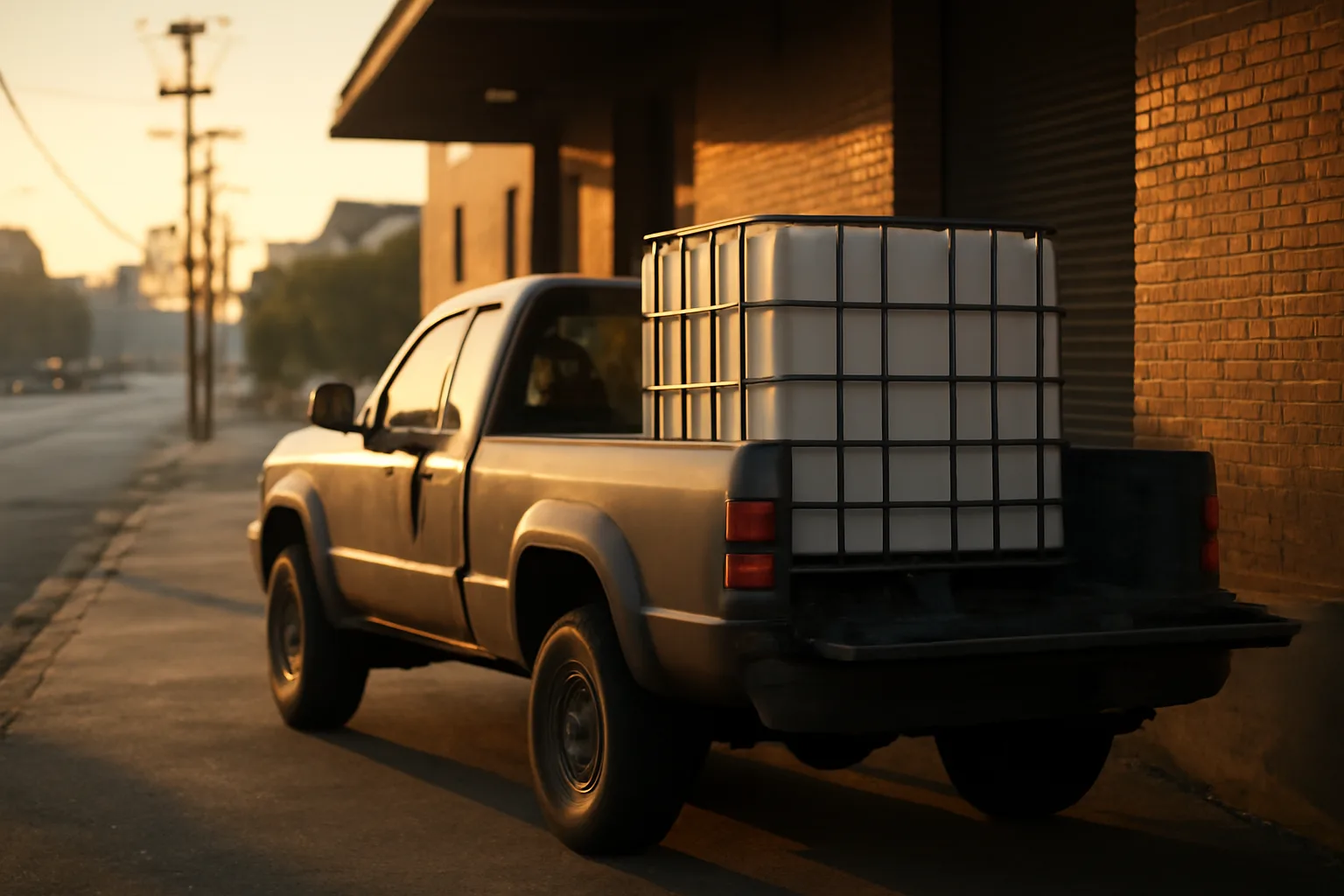
Startup cost is a different animal from the per-pound economics. Before you collect your first gallon, you need a vehicle, a tank or IBC totes, and state registration. That's where your real out-of-pocket begins.
Do you need a license for yellow grease in Tennessee?
Yes. Tennessee requires anyone transporting used cooking oil commercially to register with the Tennessee Department of Agriculture (TDA) under the state's Rendered Products Act [2]. The TDA regulates renderers, collection services, and transporters of rendered products, which includes used cooking oil (yellow grease).
The Tennessee Code Annotated (T.C.A.) Title 44, Chapter 20 covers rendered products and gives the TDA authority to license and inspect operations handling animal fats and cooking oils [2]. Registration is not optional if you're hauling for pay or building a collection route.
The registration fee and specific application form can change. Confirm the current fee schedule with the TDA before submitting anything. Recent TDA guidance has put annual registration fees for collection services in the range of $50, $200 depending on operation size, but verify this with the agency, because fee schedules update without broad public notice.
Beyond the state registration, you'll want a standard Tennessee business entity (an LLC is most common for sole operators), which costs $300 to file online with the Tennessee Secretary of State [3]. Crossing state lines to deliver to a renderer next door? Check that state's transporter rules too. Alabama, Georgia, and Arkansas all have their own registration requirements.
You don't need a federal permit purely to collect and transport yellow grease within Tennessee. But if your vehicle exceeds 26,001 lbs GVWR you'll need a CDL and may need USDOT registration under FMCSA rules [4]. Most startup operators use smaller trucks and stay under that threshold.
How much does startup cost for yellow grease in Tennessee?
Here's a realistic cost table for a first-year Tennessee yellow grease operation:
| Item | Low estimate | High estimate | Notes |
|---|---|---|---|
| TDA collection service registration | $50 | $200 | Confirm with TDA |
| Tennessee LLC filing | $300 | $300 | Online, Secretary of State [3] |
| Used truck (1-ton, diesel) | $8,000 | $22,000 | Varies widely by age and condition |
| IBC totes (2-4 x 275 gal) | $400 | $1,200 | New vs. reconditioned |
| Grease bin/barrel locks | $150 | $500 | Anti-theft hardware |
| Commercial general liability insurance | $600 | $1,400 | Annual; varies by carrier and coverage |
| DOT vehicle inspection (annual) | $50 | $100 | Required for commercial vehicles |
| Misc. (hoses, pump, PPE) | $200 | $600 | |
| Total before first pickup | $9,750 | $26,300 |
The truck swings everything. Some first-year operators already own a suitable diesel pickup and cut their startup costs dramatically. Some lease a van. The numbers above assume you're buying.
Theft prevention is one of those costs people skip and then regret. Yellow grease theft is a real problem in Tennessee, as it is across the South, because the commodity value runs high enough to make an unlocked bin worth raiding [5]. Locking your bins is cheap insurance.
YellowGreasePath sells a one-time Bin + Theft + Renderer Kit for $149 at /start that covers documentation templates for bin agreements, theft deterrence checklists, and renderer contract frameworks. That's paperwork scaffolding that saves you from building it alone, though state-specific legal advice still needs to come from a Tennessee attorney.
For comparison, see what startup costs look like in neighboring states: yellow grease cost in Alabama and yellow grease cost in Georgia.
How long does yellow grease licensing take in Tennessee?
Nobody has good published data on average TDA processing times for collection service registrations. The TDA handles multiple license types, and processing time depends on their current workload, whether your application is complete, and whether they need to schedule an inspection.
What operators report is that a complete application with all required documentation processes in two to six weeks. Incomplete applications restart the clock. The TDA may require an inspection of your vehicle or facility before issuing registration, which adds scheduling time, especially if you're in a rural part of the state and the nearest inspector has a full calendar.
Plan for four to eight weeks from submission to approval if you want to budget time conservatively. Submit everything in one go. Missing documents are the single most common reason applications drag. Confirm current processing times with the TDA before you plan your route launch date.
Your Tennessee LLC, by contrast, typically processes in three to five business days online through the Secretary of State's portal [3]. Do the LLC first, then apply for TDA registration under your entity name.
What do renderers pay for yellow grease in Tennessee?
Renderer prices for yellow grease fluctuate with the broader commodity market. The USDA tracks rendered product prices, and yellow grease has historically traded between $0.25 and $0.55 per pound at the processor level over the past several years, with spikes tied to biodiesel feedstock demand and soy oil prices [1].
Tennessee collectors sell to regional renderers, often based in Memphis, Nashville, or just across state lines. The renderer sets their own buy price and adjusts it frequently. You'll negotiate a per-gallon or per-pound price and usually sign a supply agreement that sets pickup frequency and minimum volumes.
One thing worth knowing: Tennessee's Rendered Products Act gives the TDA authority to inspect rendered product transactions, which means your renderer will also be registered and inspected. Working with a registered Tennessee renderer protects you legally and makes audits cleaner. Don't haul to an unregistered buyer.
For context on how Tennessee's market compares to a larger state, see yellow grease cost in Florida or a smaller neighboring market like yellow grease cost in Arkansas.
How does yellow grease pricing compare to other states near Tennessee?
Tennessee sits in a competitive mid-South market. Renderer density is reasonable around Memphis and Nashville, which means you have real price competition to play. States like California have more renderers but also far more regulatory overhead and higher operating costs. Alabama and Mississippi have fewer renderers and sometimes longer haul distances to a buyer.
The per-pound rebate a Tennessee collector can offer restaurants is mostly driven by what the renderer pays minus hauling cost. Running a 100-mile round trip to a renderer? Your net is lower than a collector who drops off locally. Route density, meaning how many gallons you pick up per mile driven, matters more than any single line-item cost.
For raw comparison: yellow grease cost in Alabama and yellow grease cost in Georgia show similar mid-South market dynamics. Yellow grease cost in California shows what a high-regulation, high-competition market looks like. Yellow grease cost in Colorado shows a thinner, less-competitive renderer market.
What ongoing costs should Tennessee yellow grease operators budget for?
First-year costs are one thing. Ongoing annual costs decide whether you stay profitable.
The big recurring costs are TDA registration renewal (confirm annual vs. biennial with the agency), vehicle maintenance and fuel, liability insurance renewal, and any bin replacement or repair. Fuel surprises new operators most. A diesel truck doing 500 route miles a week burns $300, $500 a month in fuel at current prices, and that comes straight off your renderer revenue.
Insurance deserves its own note. General commercial liability for a UCO hauling operation runs roughly $600, $1,400 a year in Tennessee. Add commercial auto coverage on the truck and you're potentially looking at another $1,200, $3,000 annually depending on your driving record, vehicle age, and the insurer. Some operators find that one carrier writing both policies gives them a better combined rate.
Theft is an ongoing cost, not a one-time expense. A stolen bin means replacing the hardware and potentially losing the restaurant account while you sort it out. Regular lock checks and bin audits are cheap compared to the alternative.
Most experienced collectors run a simple monthly P&L: renderer revenue minus fuel, insurance pro-rated, maintenance reserve, and registration pro-rated. If that number is positive and growing as your route density builds, you're on track.
Is yellow grease collection profitable in Tennessee?
Honestly, it depends on route density more than any other factor. A collector running 20 accounts concentrated in a 15-mile radius is likely profitable after the first year. A collector running 8 accounts spread across 60 miles of rural Tennessee is likely losing money on fuel.
The margin math is roughly this. Collect 2,000 pounds a week at a $0.35/lb renderer price and that's $700 gross weekly. Subtract fuel ($100, $150/week on a tight route), insurance ($25, $35/week), and a truck maintenance reserve ($50/week), and you're looking at maybe $450, $500/week net before your own labor. That's not get-rich money. It's real income for someone who builds the route systematically.
Many Tennessee operators grow by adding restaurant accounts in tight geographic clusters rather than chasing every account regardless of location. The first 10 accounts are the hardest to get and the cheapest to serve once you have them. Accounts 11 through 30 often come faster through word of mouth and tend to have better pickup ratios.
Nobody publishes audited profitability data for independent yellow grease collectors in Tennessee or nationally, so the above reflects the general economics of the business, not a guaranteed outcome.
What are the Tennessee Department of Agriculture's rules for used cooking oil?
The TDA administers Tennessee's Rendered Products Act under T.C.A. Title 44, Chapter 20 [2]. The Act requires anyone collecting, transporting, or processing rendered products, including used cooking oil, to register with the TDA and submit to inspection.
The Act states that no person shall engage in the business of a renderer, collection service, or transporter of raw materials without first obtaining a license from the department [2]. That's the key line. There's no exemption for small operators or hobbyist collectors hauling for pay.
Inspections can cover your vehicle, your storage containers, and your records. You're required to keep records of pickups including the source (restaurant or food-service business), the quantity, and where you delivered the material. Those records are what an inspector will ask for if they show up.
Violations can result in civil penalties. The TDA has authority to seize unregistered shipments. This isn't the kind of regulation you want to discover after you've already built a route. Register first.
How does theft affect yellow grease costs in Tennessee?
Yellow grease theft is documented nationwide, and Tennessee is no exception. The FBI and USDA have both noted that used cooking oil theft costs the rendering industry tens of millions of dollars annually across the country [5]. For an individual collector, losing even one 275-gallon IBC tote of oil is a real financial hit, plus the cost of replacing the container and the relationship risk with the restaurant.
The practical cost of theft prevention (locking hardware, security cable, bin sensors) is small relative to the loss. A good lock set for a tote or barrel runs $30, $80. A padlock hasp welded to a steel collection barrel might cost $100, $150 in materials and a welder's hour.
Restaurant owners appreciate collectors who take theft prevention seriously, because theft from the restaurant's property is disruptive for them too. Positioning your anti-theft setup as a service feature, rather than a self-protection measure, can help you win and keep accounts.
YellowGreasePath's Bin + Theft + Renderer Kit at /start includes a checklist and template documentation for this exact issue.
Frequently asked questions
Do you need a license for yellow grease in Tennessee?
Yes. The Tennessee Department of Agriculture requires registration under the Rendered Products Act (T.C.A. Title 44, Chapter 20) for anyone collecting, transporting, or processing used cooking oil commercially. There is no small-operator exemption. Confirm current registration fees and application requirements directly with the TDA before starting your route.
How much does yellow grease cost in Tennessee?
Collectors typically pay restaurants nothing for low-volume accounts and may offer a $0.10, $0.35 per pound rebate for high-volume accounts. Renderers pay collectors in the range of $0.25, $0.55 per pound depending on market conditions and volume. Startup costs run $9,750, $26,300 before first pickup, dominated by the vehicle cost.
How long does yellow grease licensing take in Tennessee?
The TDA does not publish a guaranteed processing time. Based on operator reports, a complete application processes in roughly two to six weeks, but this can extend if an inspection is required or if documentation is missing. Plan conservatively for four to eight weeks. Confirm current timelines with the TDA before setting a route launch date.
What agency in Tennessee handles used cooking oil licensing?
The Tennessee Department of Agriculture administers registration for collection services, transporters, and renderers of used cooking oil under the state's Rendered Products Act, T.C.A. Title 44, Chapter 20. Contact the department directly for current application forms and fees.
Can I collect yellow grease in Tennessee without registering?
No. The Rendered Products Act requires registration before you collect or transport used cooking oil commercially. The TDA has authority to inspect operations and seize unregistered shipments, and violations carry civil penalties. Hauling without registration is not a gray area.
What does yellow grease sell for at Tennessee renderers?
Renderer buy prices for yellow grease fluctuate with biodiesel feedstock demand and broader commodity markets. The range over recent years has been roughly $0.25, $0.55 per pound. Tennessee renderers concentrated in the Memphis and Nashville areas set their own prices and adjust them regularly. Negotiate directly with your renderer for current rates.
How much does a Tennessee LLC cost for a grease collection business?
Filing an LLC with the Tennessee Secretary of State costs $300 online. Processing typically takes three to five business days. You'll want the LLC established before applying for TDA registration so your registration is in the business entity name rather than your personal name.
Is yellow grease collection profitable in Tennessee?
It can be, but route density is the deciding factor. A collector doing 2,000 pounds a week on a tight route might net $450, $500 weekly after fuel, insurance, and a maintenance reserve. Sparse routes with long drives between accounts often lose money on fuel. Build accounts geographically close together before expanding radius.
What records does Tennessee require for yellow grease collection?
The TDA requires registered collection services to keep records of each pickup, including the source business, quantity collected, and where the material was delivered. Inspectors may review these records during compliance checks. Keeping clean digital records from day one avoids problems later.
Does yellow grease theft happen in Tennessee?
Yes. Used cooking oil theft is documented nationwide, with the FBI and USDA estimating tens of millions of dollars in annual losses across the rendering industry. Locking bins and totes, using security cables, and doing regular audits are standard practice. Anti-theft hardware runs $30, $150 per bin and is worth every dollar.
Do I need a CDL to haul yellow grease in Tennessee?
Only if your vehicle's gross vehicle weight rating exceeds 26,001 pounds. Most startup operators use 1-ton pickup trucks or cargo vans that stay well under that threshold and don't require a CDL. If you eventually scale to a larger tank truck, check FMCSA requirements and Tennessee CDL rules before you drive it.
How does Tennessee yellow grease compare to neighboring states like Alabama or Georgia?
Tennessee, Alabama, and Georgia all sit in the mid-South market with similar renderer pricing and comparable regulatory overhead. Tennessee's renderer concentration around Nashville and Memphis gives collectors decent price competition. Alabama and Georgia have their own registration requirements that apply if you cross state lines to deliver or collect.
Sources
- USDA Agricultural Marketing Service, Livestock, Poultry, and Grain Market News: Yellow grease (used cooking oil) commodity prices at the processor/renderer level, historical range $0.25, $0.55 per pound
- Tennessee Code Annotated, Title 44 Chapter 20, Rendered Products Act: Tennessee requires registration of renderers, collection services, and transporters of used cooking oil under T.C.A. Title 44, Chapter 20
- Tennessee Secretary of State, Business Services Division: Tennessee LLC online filing fee is $300
- Federal Motor Carrier Safety Administration, Commercial Driver's License requirements: Vehicles with GVWR exceeding 26,001 lbs require a CDL under federal FMCSA rules
- USDA Agricultural Research Service Publications: Used cooking oil theft costs the rendering industry tens of millions of dollars annually nationwide
- Tennessee Department of Agriculture: TDA administers licensing for rendered products collection services and transporters in Tennessee
- North American Renderers Association: Yellow grease market pricing, renderer transaction norms, and industry economics
- U.S. Energy Information Administration, Biofuels: Biodiesel feedstock demand correlation with used cooking oil commodity price movements